Do You Need Reef Shoes for Snorkelling, and Can You Wear Them With Fins?
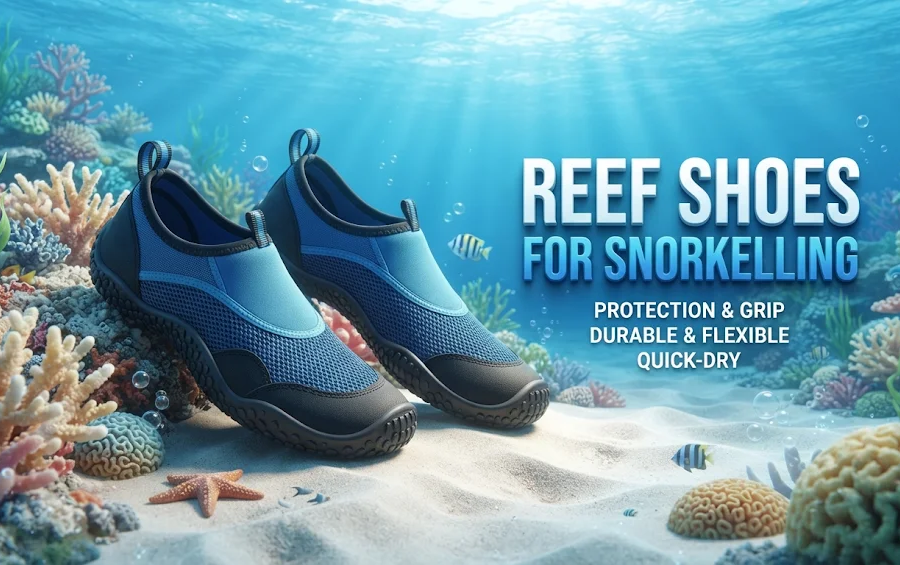
If you are getting into snorkelling, two questions come up quickly. Are reef shoes necessary, and if you wear them, will they still work with your fins? The short answer is that reef shoes are genuinely useful for protection on rocky entries and shore access, but they are not essential for every kind of snorkelling. And yes, they can be worn with fins, provided you have the right type and sizing. This article explains when you need reef shoes for snorkelling, how they work with fins, and how to choose the right pair.
What Are Reef Shoes?
Reef shoes are lightweight water shoes designed to protect your feet and add grip in and around the water. They are particularly useful over rocks, shells, and rough or uneven surfaces, where bare feet are vulnerable to cuts and slips. As a type of water shoe, they offer coverage and traction without the bulk of heavier footwear. For snorkellers who enter the water from rocky or sharp shorelines, they can make the difference between a comfortable entry and a painful one, which is why they are such a popular piece of kit.
Do You Need Reef Shoes for Snorkelling?
Whether you need reef shoes for snorkelling depends largely on where you snorkel. They are genuinely valuable for rocky shore entries, rock pools, and beaches with sharp shells or uneven seabeds, where foot protection matters. On the other hand, they are far less necessary for sandy beaches or boat-based snorkelling, where you enter the water directly without scrambling over rocks. In short, the terrain you are getting in and out over is the deciding factor, rather than the snorkelling itself.
When Reef Shoes Are Worth Wearing
There are several situations where reef shoes clearly earn their place:
- Rocky or uneven shore entries.
- Beaches with sharp shells or rocks underfoot.
- Rock pools and reef flats.
- Protecting your feet from cuts and hot sand.
- Adding grip on slippery surfaces.
In these conditions, reef shoes protect your feet and help you move with more confidence. If your usual snorkelling spot involves any of these, a pair is well worth having, as the protection and grip they provide can prevent injuries and make the whole experience more comfortable.
Can You Wear Reef Shoes With Fins?
Yes, you can wear reef shoes with fins, but it depends on the type of fin and the sizing. Open-heel fins, which use an adjustable strap, are designed to be worn over reef shoes or dive boots, making them the natural choice if you want foot protection. Full-foot fins, by contrast, are worn barefoot and usually leave no room for a shoe. If you plan to pair reef shoes with fins, you may need to choose a slightly larger fin size to accommodate the added bulk of the shoe, so it is worth considering both together rather than separately.
Open-Heel vs Full-Foot Fins
Understanding the two fin types is central to this question. Open-heel fins have an adjustable strap at the back and an open design that fits over reef shoes or boots, giving you both protection and propulsion. Full-foot fins enclose the entire foot and are worn barefoot, much like a slipper, which leaves no space for a shoe. If wearing reef shoes with your fins matters to you, open-heel fins are the way to go. Matching your footwear to your fin type from the start saves frustration and ensures everything works together comfortably.
How Should Reef Shoes Fit?
A good reef shoe should feel close and secure, but not tight. There should be no heel slip, so the shoe stays firmly in place when wet and does not come loose as you move through the water or over rocks. A secure fit is especially important if you plan to wear the shoes inside fins, as a loose shoe can shift around and cause discomfort. Aim for a snug, comfortable fit that holds your foot without pinching, and you will get the best from them both in and out of fins.
Reef Shoes vs Water Shoes vs Dive Boots
It helps to understand how these terms relate. Water shoe is the broad category that covers all lightweight footwear for wet environments. Reef shoes sit within this group and tend to be lighter, designed for general water access and shore protection. Dive boots are thicker and made specifically to pair with open-heel fins, offering more warmth and durability for diving. For most snorkelling, reef shoes are sufficient, while dedicated divers or those in colder water may prefer the extra protection of dive boots.
How to Choose Reef Shoes for Snorkelling
Choosing the right pair comes down to a few factors. Look for a secure fit that stays put when wet, and a sole that is both grippy and protective against rocks and shells. Quick-dry material and good drainage keep your feet comfortable, while compatibility with your fins matters if you plan to use both together. Thinking about where and how you snorkel will guide your choice, ensuring the shoes suit your typical entries and work with the rest of your gear.
Frequently Asked Questions
Do you need reef shoes for snorkelling?
It depends on where you snorkel. They are useful for rocky entries, rock pools, and sharp seabeds, but less necessary for sandy beaches or boat-based snorkelling.
Can you wear reef shoes with fins?
Yes, with open-heel fins that are designed to fit over them. Full-foot fins are worn barefoot, and you may need a larger fin size to fit a reef shoe.
Can you swim in reef shoes?
Yes, though for sustained snorkelling, properly fitted fins provide the propulsion that reef shoes cannot. Reef shoes are mainly for protection and shore access.
Are reef shoes the same as water shoes?
Water shoe is the broad term, and reef shoes are a type of water shoe, usually lighter and designed for general water access and foot protection.
Key Takeaways
Reef shoes are well worth wearing for rocky, sharp, or uneven snorkelling entries, though they are not essential everywhere, particularly on sandy beaches or boat trips. When it comes to fins, you can wear reef shoes with open-heel fins if you size them correctly, while full-foot fins are worn barefoot. The right choice depends on where you snorkel and the fins you use. Explore a range of reef shoes and water footwear, and find the pair that suits your snorkelling and works with your gear.

Writer at ShotScribuss, covering the latest in tech and gadgets.